


Kenyan Culture Beyond the Headlines: Why I Created Jikoni

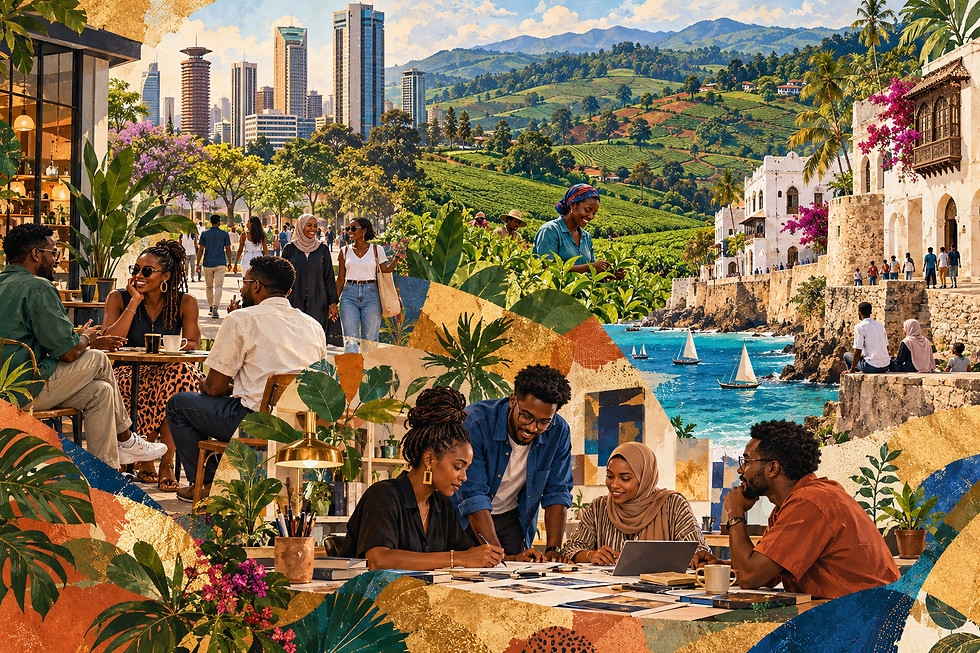
One thing I wish more people understood about Kenya is how diverse we are. Our food is part of that, but so are our people, our languages, our landscapes, and the different ways we experience being Kenyan. When I think about Kenya, there is so much that comes to mind. Then I look at the version of Kenya people may encounter through American media, and I feel the distance between those two pictures.
Whatever someone has seen in a headline or a travel feature, there is always more to know. I want to make room for that “more.” It is a big part of why I created Jikoni and why I do the work I do through Studio Mboone.
I want to share a Kenya you can become curious about. A Kenya with people whose lives, tastes, ideas, and experiences might surprise you—and whose everyday concerns might feel very familiar.
I can tell you about my Kenya. Other Kenyans will have their own stories.
I am Kenyan, and I am Maragoli, part of the Luhya community. That gives me a particular place within a much larger story. My experience matters, and so does the fact that it cannot represent everyone.
Another Kenyan may have grown up speaking different languages, eating different foods, or practicing a different faith. Even people from the same community can have very different experiences depending on their family, generation, and where they have lived. That is something I want people to hold onto when they encounter Kenyan culture: there is room for several answers.
Ask us what food reminds us of home, and you may start a very long conversation. Ask how something should be cooked, and you may start an argument. You will probably need to eat while everyone explains why their version is correct.
I enjoy that. The differences are part of what makes the conversation worth having. They tell you something about the person in front of you.When I share a recipe or a story, I am offering a way into that conversation. I hope it encourages you to listen to other Kenyans, too.
Our connections with the world are part of our identity.
I also wish people approached Kenya with more curiosity about the influences that have shaped us over time. Sometimes people seem to expect a culture to have clear boundaries: this belongs here, that came from somewhere else, and somehow we should be able to separate everything neatly.
My interest is in what happens when people meet. What do they share? What do they adopt? What changes as something becomes part of daily life? What do later generations make their own? Food gives us a very practical way to explore those questions. You can encounter something familiar in an unfamiliar setting. You may recognize an ingredient or a name, then discover that the preparation, accompaniments, or meaning are different from what you expected.
I like those moments because they make us pay attention. They invite a better question than “Is this what I thought Kenya would be like?”
They invite us to ask, “What can I learn here?”
That is the kind of curiosity I hope Jikoni encourages.
Food is where I begin because it gives us something to do together.
Jikoni means “kitchen” in Swahili. I chose to work through food because you can participate immediately. You can cook something, taste it, offer it to someone else, and talk about what you notice.
You do not need to know everything about Kenya before you try a recipe. You can begin with an appetite and a willingness to learn.
While I was making the Jikoni cookbook, I was listening to music. I listen to music when I cook, too. Bringing music into the project felt natural because it belonged to the experience I wanted to share.
I wanted people to cook, listen, and sing along. I wanted them to enjoy themselves.
That matters to me. When I share my culture, I want room for pleasure, humor, and the ordinary things that make life good. A meal can be delicious. A song can make you move. Something can make you laugh before it makes you think.
There is value in getting to know a place through what its people enjoy.
This is also why Studio Mboone takes several forms.
Food, art, music, writing, and the things I make give me different ways to express what interests me. Sometimes a story needs words. Sometimes I want to work with color. Sometimes I want to make something you can use. The connection is me: my Kenyan identity, my curiosity, and my desire to create experiences that lead to conversation.
I want the freedom to share heritage and to experiment. My work also reflects what I am learning and what catches my attention now. Being Kenyan is part of how I see the world, and I bring that perspective into new ideas.
That is another part of diversity I care about. We should have room to be individuals within our cultures—to have our own tastes, to try things, and to create something unexpected.
What I hope you take away
I do not expect a cookbook, a song, or a piece of art to give anyone a complete understanding of Kenya. I hope it gives you a reason to keep looking.
Perhaps you try a dish and want to know where it comes from. Perhaps a song makes you curious about the words. Perhaps something I share changes an assumption you did not realize you had.
For me, that would be meaningful.
There is more to us than the stories that tend to reach you. I want to contribute some of the stories you might otherwise miss, starting with the ones I can tell personally.
Through Jikoni and Studio Mboone, I am inviting you to spend a little time with my Kenya—and to remain curious about all the other Kenyas you have yet to meet.


Comments